Preparing Your Dog for Long Road Trips: Stress-Free Travel Tips
Planning a big getaway with your dog can be exciting, but a long drive often comes with unique challenges. Many pet parents worry about comfort, safety, and how their dogs will react to hours in the car. Early preparation makes a huge difference, especially when managing dog road trip stress and keeping your pet calm. Some travel tips even come from veterinary teams who handle similar issues daily, including those working in veterinary jobs, where behaviour and health guidance are part of everyday care.
Long drives can be fun when your dog feels safe and relaxed. With the right routine, training, and travel supplies, you can reduce anxiety, prevent sickness, and enjoy a much smoother experience on the road.
Why Preparation Matters for Long Road Trips With Dogs
Preparing your dog ahead of time makes travel easier for both of you. Dogs may associate car rides with stress, especially if they only visit the vet or groomer in the car. Building positive associations through short practice trips helps them feel more secure. It also gives you a chance to observe any early signs of dog car anxiety before the actual journey begins.
Routine preparation also helps reduce behavior issues, like whining, pacing, or restlessness. When dogs know what to expect, they settle faster and handle longer drives more comfortably. A good plan improves not only comfort but also dog travel safety, especially during extended trips.
Health Checks and Travel Readiness
Before a long trip, it's helpful to check in with your vet to confirm that your dog is healthy enough for travel. Some dogs, especially puppies, seniors, or pets with chronic illnesses, may need special support. Your veterinarian may recommend travel-safe medications or supplements that can help reduce anxiety or nausea.
If your dog has a history of car sickness, early action is important. Motion sickness can affect even well-trained dogs, and the symptoms—drooling, lip licking, shaking, or vomiting—can make any drive uncomfortable. Your vet may suggest gentle dog car sickness remedies or training routines that help desensitize your dog to motion.
Reducing Anxiety: Helping Your Dog Stay Calm on the Road
Many dogs experience stress during long rides, especially if they are not used to long trips. Building a calm foundation helps with reducing dog travel anxiety and makes the entire journey more enjoyable. Start by creating positive car experiences with treats, praise, or short fun rides.
Comfort items also make a difference. A familiar blanket, favorite toy, or even a worn T-shirt with your scent can help your dog relax. Dogs thrive on routine, so keeping feeding, walking, and resting times consistent throughout travel helps balance stress levels.
Handlers who work in vet clinic jobs often recommend calming music, pheromone sprays, or safe chew items as additional tools to ease stress in anxious dogs.
Car Safety: Protecting Your Dog During the Drive
One of the most essential parts of travelling with dogs is making sure they're safely secured. A loose dog in the car can be dangerous for both the pet and the driver. Using a properly fitted travel harness, secure crate, or dog seat belt improves safety and gives your dog a clear, comfortable space.
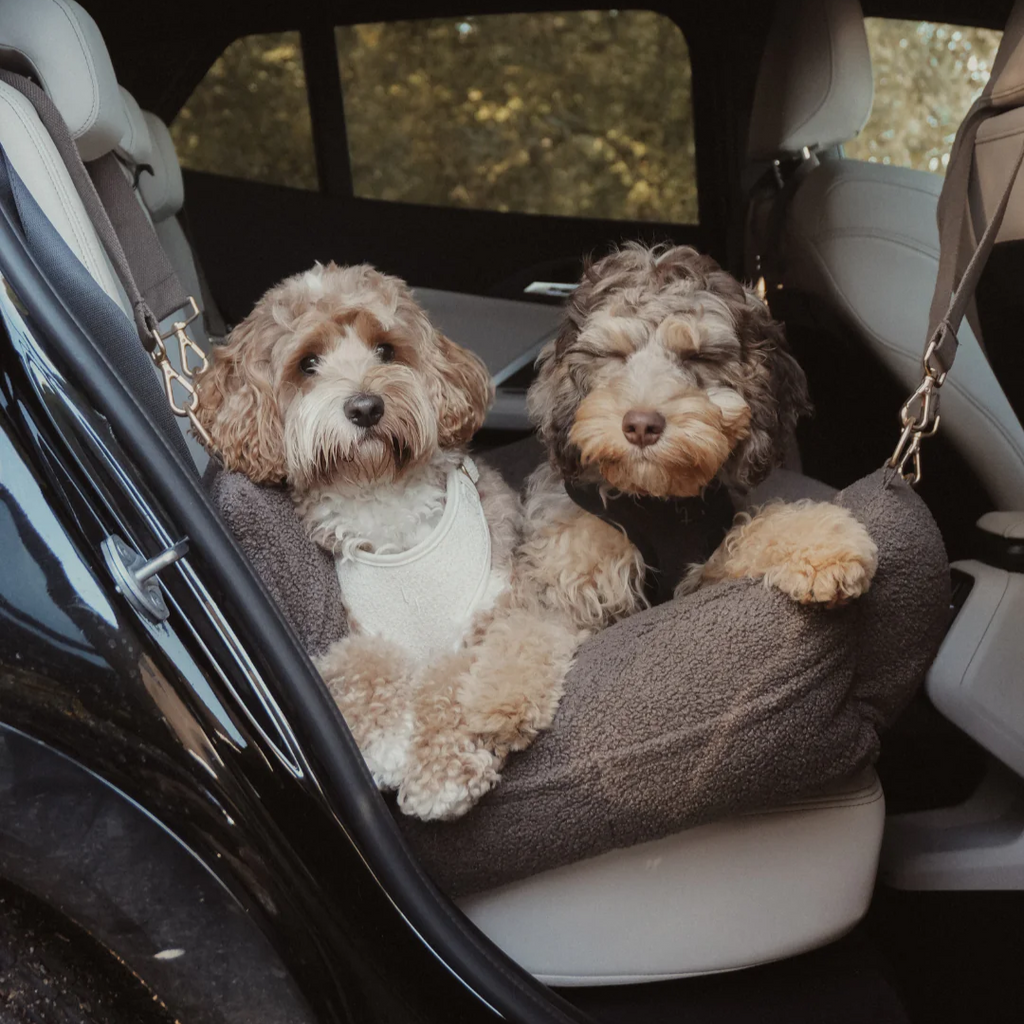
The By Teddy Extra Large Cosy Dog Car Seat fits the entire rear bench of a vehicle, providing an inviting, natural and comfortable space fir your dog, for a successful, stress-free journey.

The included pet seat belt attaches at one end to the Cosy Dog Car Seat by clipping on to a secure D-ring and clips to your dog's harness, never a collar, to safely distribute force of sudden braking. Creating a safe and secure ride.

When choosing a crate for long road trips with dogs, make sure it's well-ventilated and large enough for your dog to sit, stand, and turn comfortably. Dogs feel more secure in a defined space, especially if they are prone to anxiety.
It's also important to avoid placing your dog in the front seat due to airbag risks. The back seat or cargo area with proper restraints offers the safest ride.
Managing Car Sickness in Dogs
Car sickness is common, especially in younger dogs whose balance systems are still developing. Symptoms usually include drooling, whining, panting, or vomiting. Taking breaks every couple of hours helps your dog recover and get some fresh air.
Feeding lightly before the trip can also reduce nausea. Many pet parents find that ginger treats or vet-approved travel snacks calm the stomach, although it's best to check with a veterinarian first. Keeping the car cool and well-ventilated helps reduce discomfort, especially for dogs sensitive to heat or motion.
Dog Travel Essentials: Packing for the Trip
Packing the right supplies keeps your dog safe, happy, and more comfortable. At the very least, you'll want to bring food, water, bowls, a leash, a harness, waste bags, and any daily medications. A travel first-aid kit is also helpful, especially during long drives or remote trips.
The dog travel essentials list often includes:
- A collapsible water bowl
- Poop bags
- A secure leash and backup harness
- Travel-friendly treats
- Calming chews
- Blankets or bedding
- Towels for messes or muddy paws
Having everything ready in advance prevents unnecessary stress and makes the journey smoother.

Planning Breaks and Managing Energy Levels
Regular breaks help your dog stretch, relieve themselves, and release pent-up energy. During dog-friendly travel, stopping every two to three hours is ideal. Dogs benefit from short walks that reset their senses and reduce anxiety.
Some dogs become restless or vocal if they haven't had enough exercise before the trip. A long walk or play session before loading into the car helps them relax and sleep more easily. This simple routine can dramatically reduce stress, especially in dogs prone to anxiety during travel.
Behaviour Tips for Nervous or Reactive Dogs
Dogs that react to new environments, sounds, or movement may struggle on long trips. Calm, slow introductions work best for building confidence. Allow your dog to explore the car when parked and reward them for calm behavior. Over time, increase the duration so your dog gets used to staying still and resting.
For dogs with severe anxiety, behavior support, such as calming wraps, mild supplements, or pheromone diffusers may help. Gentle reassurance also strengthens trust, and many pet parents find that quiet engagement reduces frantic behaviour.
Making the Destination Comfortable
Arriving at your destination is only half the journey. Dogs need time to adjust to new spaces, smells, and routines. Bringing familiar items from home makes the transition easier and creates an instant sense of safety.
A consistent feeding and walking schedule keeps your dog grounded. Offering praise and gentle guidance as they explore the new environment helps reduce stress, especially in sensitive dogs.
Conclusion
A great dog road trip comes down to preparation, patience, and understanding what your dog needs to feel secure. With the right habits, travel supplies, and safety planning, you and your dog can enjoy long journeys together without stress. Most importantly, staying mindful of anxiety, car sickness, and routine helps your dog stay relaxed throughout the adventure.
Traveling with pets doesn't have to be overwhelming. With simple, veterinarian-backed strategies and thoughtful preparation, you can create safe, happy, memorable trips for your dog every time.
Shop Dog Travel Solutions
Frequently Asked Questions
1. How do I keep my dog calm during long car rides?
Start with short practice trips, use calming items like familiar blankets, and keep the car cool. Reward calm behavior often.
2. How often should I stop when traveling with my dog?
Stopping every two to three hours allows your dog to stretch, drink water, and relieve themselves comfortably.
3. What is the best way to prevent car sickness in dogs?
Avoid feeding right before travel, keep the car ventilated, and ask your vet about safe anti-nausea options if needed.
4. Is it safe for dogs to ride in the front seat?
No. Airbags pose a serious risk. Dogs should ride safely restrained in the back seat or cargo area.
5. What are the must-have items for a dog road trip?
Essentials include water, food, a leash, first-aid supplies, waste bags, blankets, and a secure travel restraint.
-
Posted in
dog anxiety, dog car sickness remedies, dog road trip, dog travel essentials, dog travel safety, dog-friendly travel, long road trips with dogs, travelling with dogs